Theory Reference · Percussion
Rudiments, by family
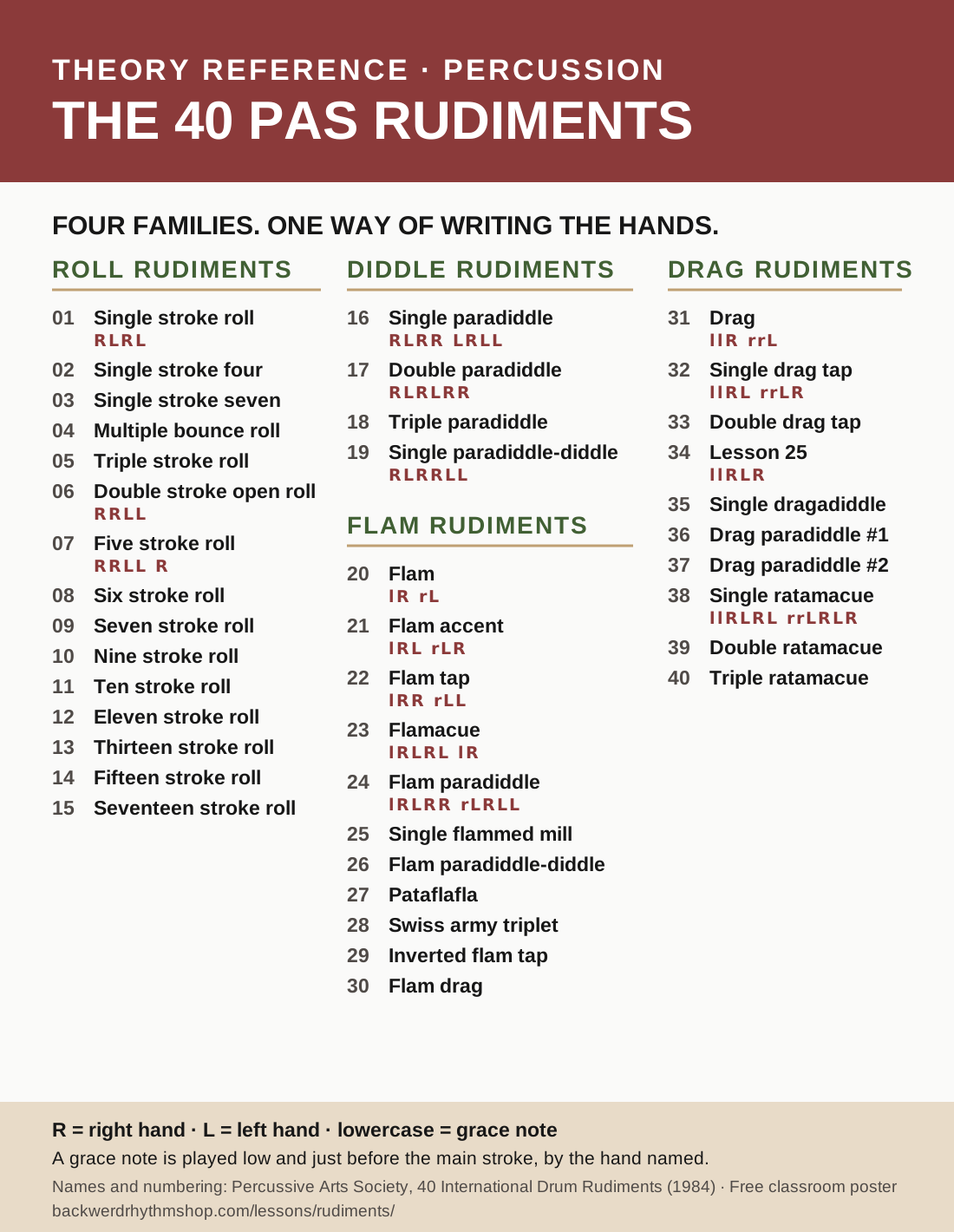
Forty named patterns, four ways of moving the hands, and one way of writing them down. Learn the families and the list stops being a list.
What a rudiment is
A rudiment is a short sticking pattern with a name. It is not a piece of music; it is a move — the way a scale is a move for a keyboard player. Every roll, every fill, and most of what a snare part asks for is built out of a few of them, which is why they are worth learning by name.
The Percussive Arts Society publishes the standard list: the 40 International Drum Rudiments. Forty sounds like a lot until you notice they sort into four families, and inside a family the rudiments differ by only one thing — how many strokes, or where the accent goes, or which hand leads.
How a sticking is written
R is the right hand and L is the left. A lowercase letter is a grace note — a quiet stroke squeezed in just before the main one, played by the hand named. So lR is a flam that lands on the right hand, and llR is a drag that lands on the right.
Roll rudiments: one hand, then the other
A roll is any pattern that keeps the sound going. The family splits by how each hand contributes.
- Single stroke roll R L R L
- Hands alternate, one stroke each. The single stroke four and single stroke seven are the same alternation cut to a length that ends on an accent.
- Multiple bounce roll R L
- Each hand presses into the head and lets the stick bounce as many times as it will. The buzz roll of concert snare. The triple stroke roll fixes that bounce at exactly three.
- Double stroke open roll R R L L
- Two strokes per hand, both played, not bounced. Every numbered roll — five, six, seven, nine, ten, eleven, thirteen, fifteen, seventeen — is this pattern counted to a length and released on an accent. A five stroke roll is RRLL R: two doubles and the accented fifth.
Ten of the forty are numbered rolls. Learn the double stroke and you have the hands for all of them; the number only tells you where to stop.
Diddle rudiments: a double inside the alternation
A diddle is one double stroke. Put one at the end of a run of singles and the lead hand switches — which is the whole reason the paradiddle exists.
- Single paradiddle R L R R L R L L
- Two singles, one diddle. Because the diddle repeats a hand, the next group starts on the other one.
- Double paradiddle R L R L R R L R L R L L
- Four singles before the diddle. Six notes to a group, so it sits naturally in 6/8.
- Triple paradiddle R L R L R L R R
- Six singles before the diddle. Eight to a group.
- Single paradiddle-diddle R L R R L L
- Two singles and two diddles. Note that this one does not switch hands on the repeat; it starts on the right every time.
Flam rudiments: a grace note before the stroke
A flam is two strokes played almost together: a soft grace note from one hand, then the main stroke from the other. The ear hears one thick note. The grace note is written lowercase and played low; the main stroke is played from height.
- Flam lR rL
- The rudiment itself, alternating. Everything else in the family is a flam placed inside another pattern.
- Flam accent lR L R rL R L
- A flam on the first of three. Triplet feel.
- Flam tap lR R rL L
- A flam followed by a tap on the same hand as the main stroke. A diddle with a flam on the front.
- Flamacue lR L R L lR
- Flam, then three singles with the accent on the second note, then a flam to close.
- Flam paradiddle lR L R R rL R L L
- A paradiddle with a flam on the first note. The flam paradiddle-diddle does the same to the paradiddle-diddle.
The rest of the family — the single flammed mill, pataflafla, Swiss army triplet, inverted flam tap and flam drag — each place the flam somewhere new in a pattern you already have. Read the sticking on the poster and find the pattern underneath it.
Drag rudiments: two grace notes before the stroke
A drag is a flam with a double for its grace note: two quick, quiet strokes from one hand, then the main stroke from the other. Written llR or rrL.
- Drag llR rrL
- The rudiment itself, alternating.
- Single drag tap llR L rrL R
- A drag and one tap. The double drag tap adds a second drag before the tap.
- Lesson 25 llR L R llR L R
- Drag, tap, accent — and it does not switch hands. Named for its page in an old method book, and the name stuck.
- Single ratamacue llR L R L rrL R L R
- A drag and three singles ending on the accent. The double and triple ratamacues add one and two extra drags to the front.
The single dragadiddle and the two drag paradiddles are paradiddles with a drag placed on the first note, the way the flam paradiddle placed a flam there.
How to practice one: open, close, open
Rudiments are traditionally practiced open–close–open: start slow, speed up gradually to as fast as you can play it cleanly, then slow back down — all without stopping. The slow ends are where you check the sticking and the stroke heights; the fast middle is where the pattern becomes a motion instead of a decision.
- Say the sticking out loud before you play it. R L R R, L R L L.
- Play it slowly enough that every stroke is a full stroke, grace notes low and main strokes high.
- Speed up over twenty or thirty seconds. The moment the sticking blurs, you have found today's ceiling.
- Come back down at the same rate. The pattern should be as clean at the end as it was at the start.
Put it on the board
Rudiment Builder shows any of the forty with its sticking under every stroke and loops it at a tempo you set — slow to fast and back, so the room watches the pattern hold while the speed changes. It shows and it plays; it does not judge. Whether the hands actually did it is still the teacher's call.
All forty, by family
The PAS numbering, so the names match any method book. The poster carries the same list at wall size.
Roll rudiments
- Single stroke roll
- Single stroke four
- Single stroke seven
- Multiple bounce roll
- Triple stroke roll
- Double stroke open roll
- Five stroke roll
- Six stroke roll
- Seven stroke roll
- Nine stroke roll
- Ten stroke roll
- Eleven stroke roll
- Thirteen stroke roll
- Fifteen stroke roll
- Seventeen stroke roll
Diddle rudiments
- Single paradiddle
- Double paradiddle
- Triple paradiddle
- Single paradiddle-diddle
Flam rudiments
- Flam
- Flam accent
- Flam tap
- Flamacue
- Flam paradiddle
- Single flammed mill
- Flam paradiddle-diddle
- Pataflafla
- Swiss army triplet
- Inverted flam tap
- Flam drag
Drag rudiments
- Drag
- Single drag tap
- Double drag tap
- Lesson 25
- Single dragadiddle
- Drag paradiddle #1
- Drag paradiddle #2
- Single ratamacue
- Double ratamacue
- Triple ratamacue
Names and numbering follow the Percussive Arts Society's 40 International Drum Rudiments (1984). PAS publishes the list; it does not publish teaching standards, so nothing here claims alignment with one.
The same topic, every way you need it
Hang it, read it, print it, drill it.
Every Backwerd topic identifies the faces that are ready — poster, lesson, printable sheet, app drill, board and teacher plans — and names an honest gap when one is not. The available faces share one set of conventions, so what hangs in the room never disagrees with what gets taught.
-
Wall
The 40 PAS Rudiments by Family
The same topic at wall-reading size — 11 × 17, black-and-white safe, free.
Download the poster -
Screen
Rudiments
The four rudiment families — rolls, diddles, flams and drags — how a sticking is written, and how to practice one so it holds up at any tempo.
You are here.
-
Desk
Printable worksheet and answer key
A student sheet and its matching key, generated together so they cannot disagree.
Print the worksheet -
Drill
Practice this in an app
Rudiment Builder shows a rudiment and loops it; no app yet asks a student to name or build one and reports whether they were right.
Not available yet.
-
Board
Rudiment Builder
Put one rudiment on the screen with its sticking under every stroke, then loop it slow to fast so the room sees the pattern hold while the tempo changes.
Open Rudiment Builder