Free · No account required
Music theory, for percussionists
A growing library written the way percussionists actually use it. Every topic gathers the lesson, wall reference, printable practice, teaching plan and any relevant app around one shared set of conventions.
12 of 13 topics have a ready-to-teach plan, and 13 a full written lesson. Every topic has its poster and a printable sheet; not every topic has an app drill yet, and each card below says which.
The syllabus
Every topic, and where it stands.
-
Plan ready
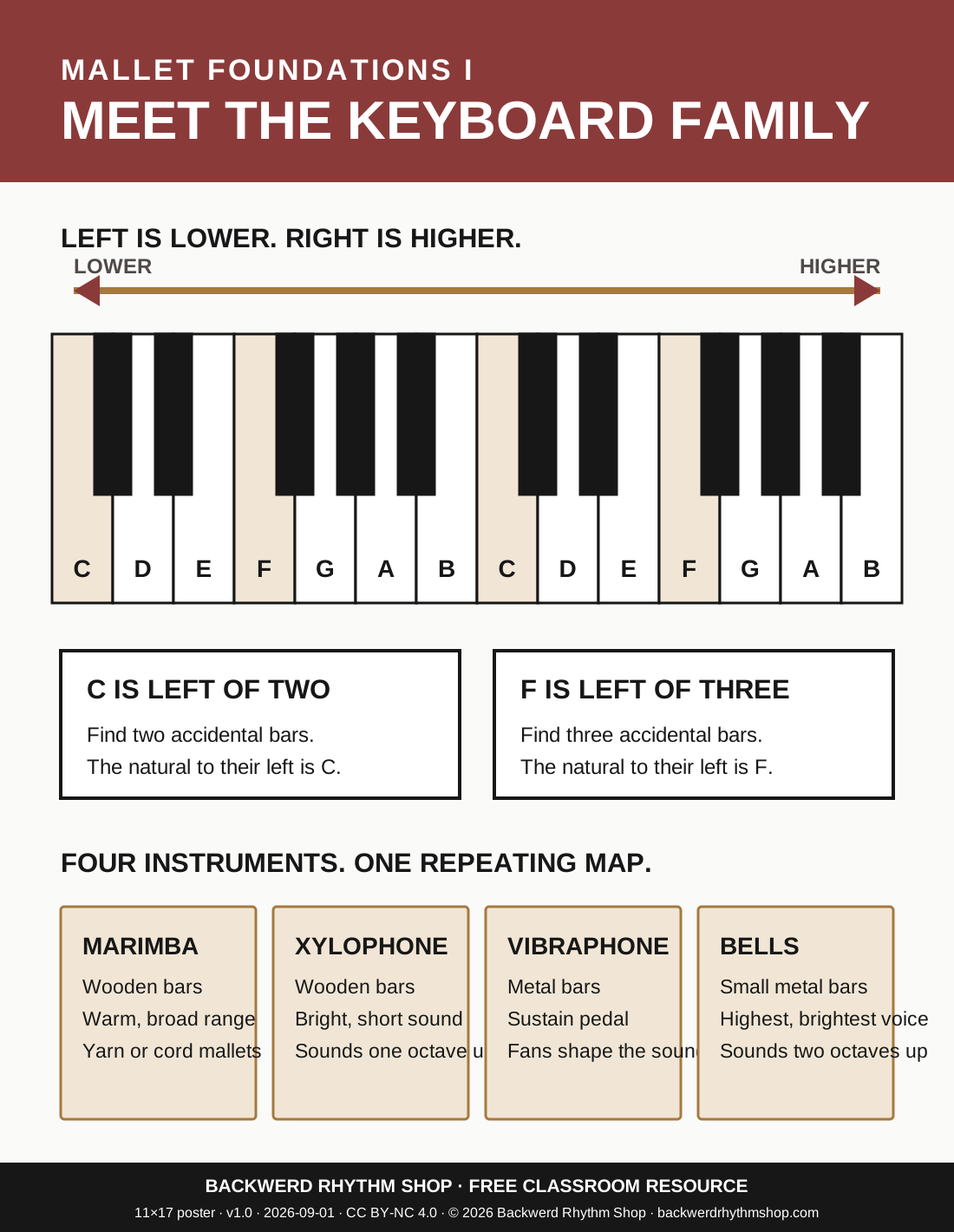
Meet the Keyboard Family
Marimba, xylophone, vibraphone and bells: four voices, one repeating keyboard map, and the C and F landmarks that make every note findable.
- Poster
- Worksheet
- 45-min first teach
- 20-min review
- No current app sequence isolates instrument-family recognition and keyboard geography at this level.
-
Plan ready
Note Names
Every line and space on the treble and bass staff, the two anchor notes that make the rest findable, and why the letters run out at G.
-
Plan ready
Notes & Rests
Note and rest values with counting and sticking, beamed the way percussionists read them.
Count It drills every note value on this poster as of 2026-08-24 — whole and half notes arrived with step 10 of Counting Rhythms, which is the only step that asks them. There is no whole rest in the drill: it fills the bar, so a measure holding one holds nothing else and has no count to ask for.
-
Plan ready
Sixteenth Rhythms
The core sixteenth-note groupings with counts and one common sticking system.
-
Plan ready
Rhythms in Three
Reading and counting in 3/4 and 3/8, including full-measure beaming in 3/8.
Count It drills the 3/4 half and its sibling app Eight Time drills the 3/8 half, with the same rhythms and seeds the meter carried before the split. No single round asks a student to tell 3/4 from 3/8 — assign the sequence's two capstone steps together for that.
-
Plan ready
Staff Road Map
The staff, clefs, and how keyboard percussion reads treble and bass.
-
Plan ready
Dynamics & Accents
Dynamic marks and accents: velocity is the engine, height is the runway.
- Poster
- Worksheet
- 45-min first teach
- 20-min review
- No app drills dynamics or accents yet.
-
Plan ready
Tempo Terms
The tempo spectrum from Largo to Presto, plus metronome marks, rit., accel., and fermata.
- Poster
- Worksheet
- 45-min first teach
- 20-min review
- No app drills tempo vocabulary yet.
-
Plan ready
Rolls & Marks
Roll notation, slashes, and common percussion articulation marks.
- Poster
- Worksheet
- 45-min first teach
- 20-min review
- No app drills roll notation yet.
-
Lesson ready
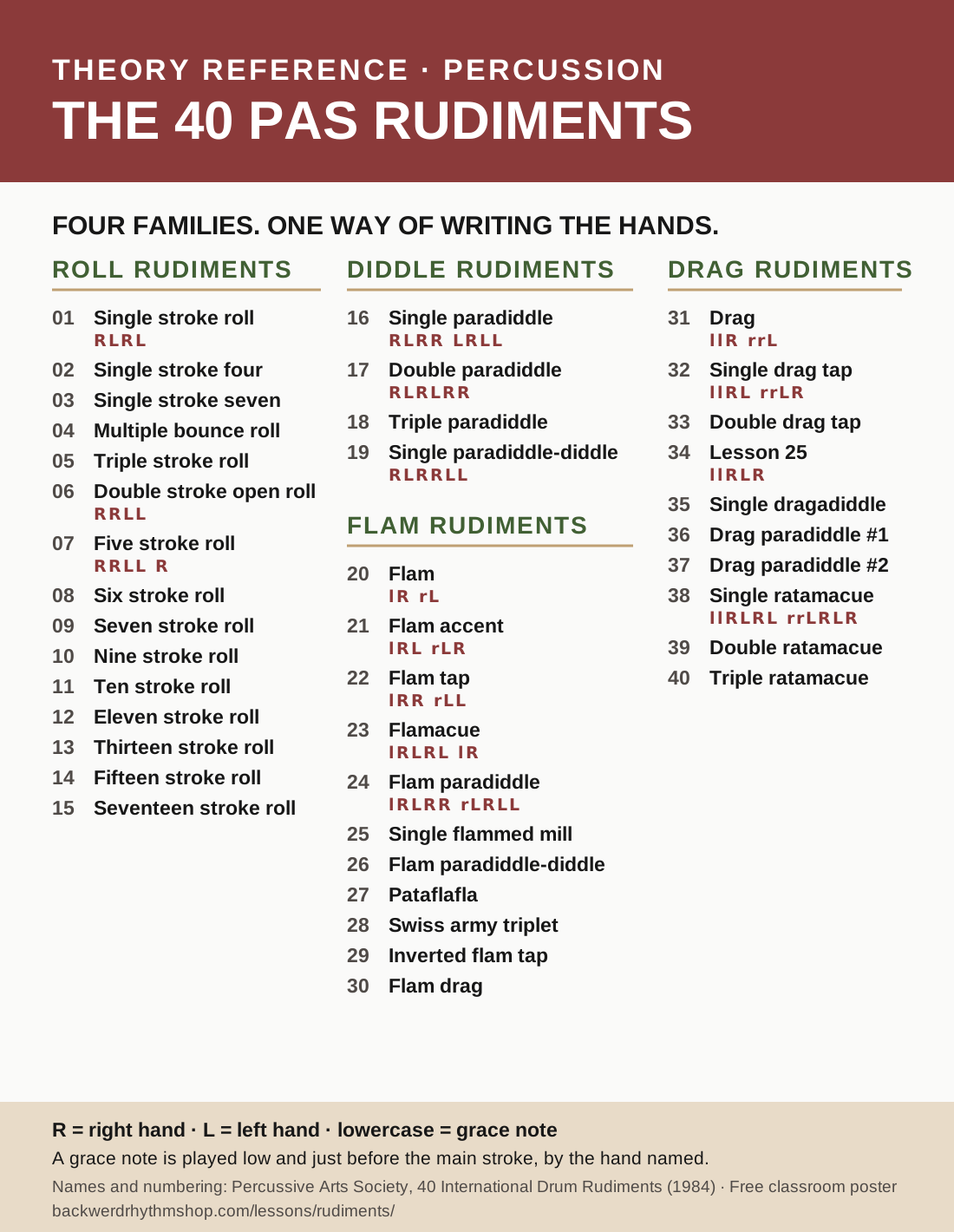
Rudiments
The four rudiment families — rolls, diddles, flams and drags — how a sticking is written, and how to practice one so it holds up at any tempo.
-
Plan ready
Time Signatures
Simple and compound meters and what the top and bottom numbers mean.
- Poster
- Worksheet
- 45-min first teach
- 20-min review
- No app drills meter identification yet.
-
Plan ready
The Grand Staff
The grand staff and ledger lines, with middle C on its own line between the staves.
-
Plan ready
Triplets & Duplets
Triplets, duplets, and tuplet notation conventions with counting syllables.
- Poster
- Worksheet
- 45-min first teach
- 20-min review
- No app drills triplets or duplets yet.