First teach · 45 minutes · Free to use and copy
Meet the Keyboard Family
Students can distinguish the four keyboard-percussion voices, describe high and low direction from the player side, and locate C and F from the repeating two-and-three accidental pattern.
Review — Twenty minutes, for a room that has met this before and half remembers it.
Before the bell
Assumes students can already: Students can safely stand at or point to a keyboard instrument. No note-reading or mallet-technique knowledge is required; if the room cannot identify the player side, establish that orientation before beginning.
- The Meet the Keyboard Family poster, projected or printed
- A marimba, xylophone, vibraphone or bells, or the Mallet Board display
- One student worksheet per student and a separate answer key
- Pencils; mallets are optional because this lesson scores geography, not stroke technique
The period
-
5 minNotice and baseline
Which family member is this?
Show or name two contrasting keyboard instruments. Students write one observable difference and one feature they think the instruments share. Keep every answer; the shared feature becomes the lesson question.
-
9 minModel and establish target
Four voices, one map
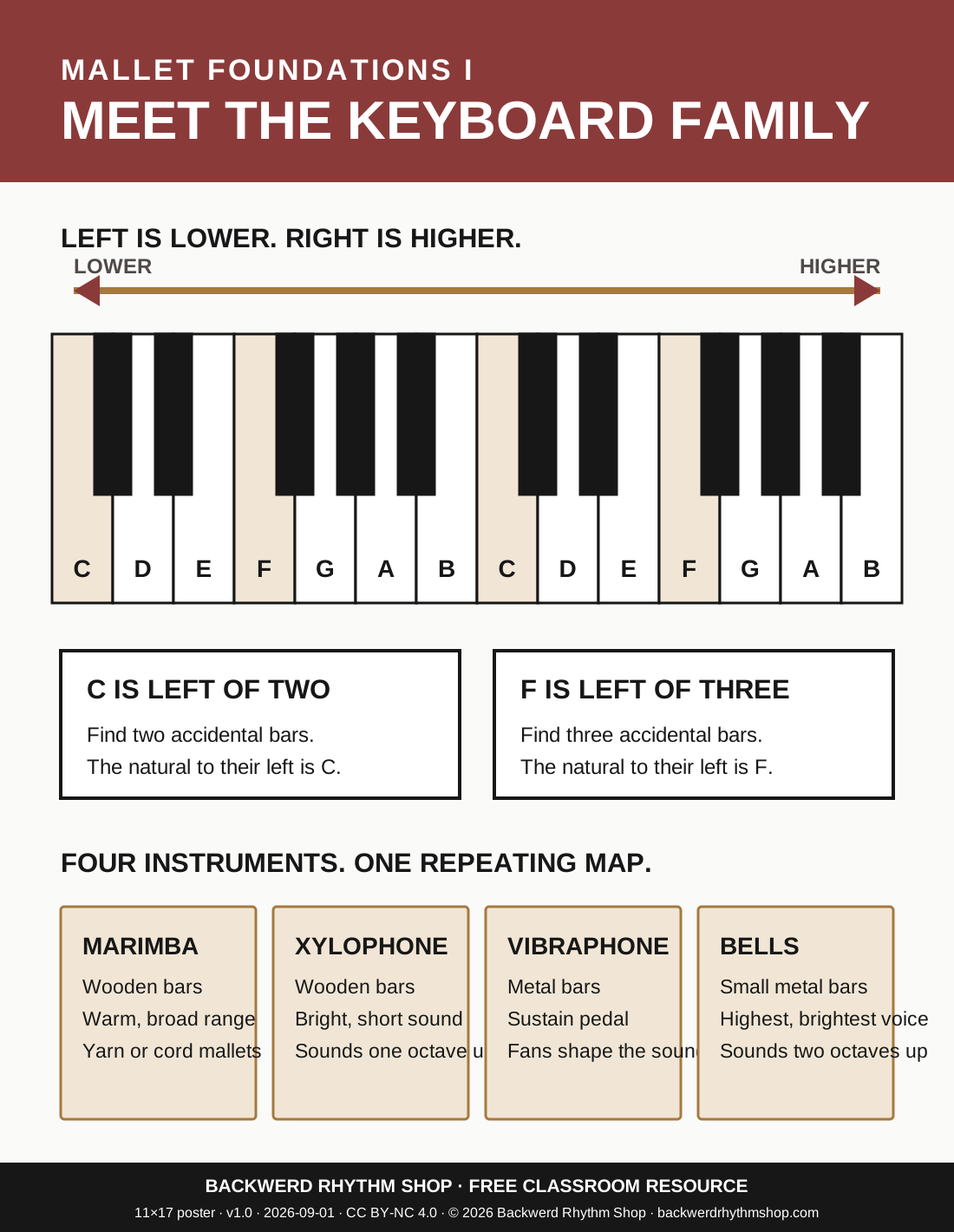
Introduce marimba, xylophone, vibraphone and bells by bar material, register and sustain. Then orient the player side and state the directional rule: left is lower and right is higher.
-
12 minCoached attempt
Find the repeating landmarks
On Mallet Board, find groups of two and three accidentals. Have the room move immediately left to C and F, then repeat the search in a second octave. Students must name the visual landmark before naming the letter.
-
14 minIndependent evidence probe
Keyboard family scavenger hunt
Students complete the worksheet, then point out the requested bars on an instrument or projected keyboard. Partners check direction words and landmark explanations, not mallet grip or tone.
-
5 minImmediate evidence and next move
Show C, show F, explain one
Call one C-or-F landmark and one direction prompt. Each student marks the answer and writes the landmark rule that produced it. Collect the sheet and compare it with the separate key.
How you will know
Evidence: The completed scavenger-hunt worksheet plus the collected C-or-F exit response.
What the current evidence supports
- Correctly identifies higher to the right and lower to the left from the player side
- Locates C immediately left of two accidentals and F immediately left of three
- Names at least three of the four family members from a defining physical or sound feature
Why this measures the objective: The worksheet records direction, family traits and landmark explanations, while the final written route distinguishes students who used the repeating pattern from students who guessed a letter.
Boundary: Evidence collected in this period describes immediate performance under the stated conditions. It does not establish durable retention or broad mastery.
Check later
Delayed check: At the start of a later rehearsal, before any review or prompting, ask for C and F in an octave the class has not used and one direction prompt from the player side. Record whether the landmark route is available with reduced support.
Reaching everybody
If they are not there yet
- Keep the poster visible and let students trace from a two- or three-bar group with one finger
- Limit the first search to one octave and ask only C before adding F
If they are ready for a changed condition
- Ask students to find every C and F across the available range
- Have students explain why matching letter names in neighboring repetitions are an octave apart
Getting at the work
- Allow pointing, eye-gaze or verbal descriptions instead of touching the instrument
- Provide a high-contrast printed keyboard map and read every visual direction aloud
If the room is not ready: If fewer than half the room can find a two-bar accidental group, stop before the worksheet. Cover the note labels, sort only two-versus-three groups on Mallet Board, and postpone C and F until the pattern is stable.
Standards note: No standards alignment is claimed for Mallet Foundations I until a code-level crosswalk has been verified.
What to look for
- Students orient from the player side rather than from the audience
- Students say the landmark before the letter: left of two for C, left of three for F
- Students describe pitch direction without confusing it with the near and far rows