Review · 20 minutes · Free to use and copy
Meet the Keyboard Family
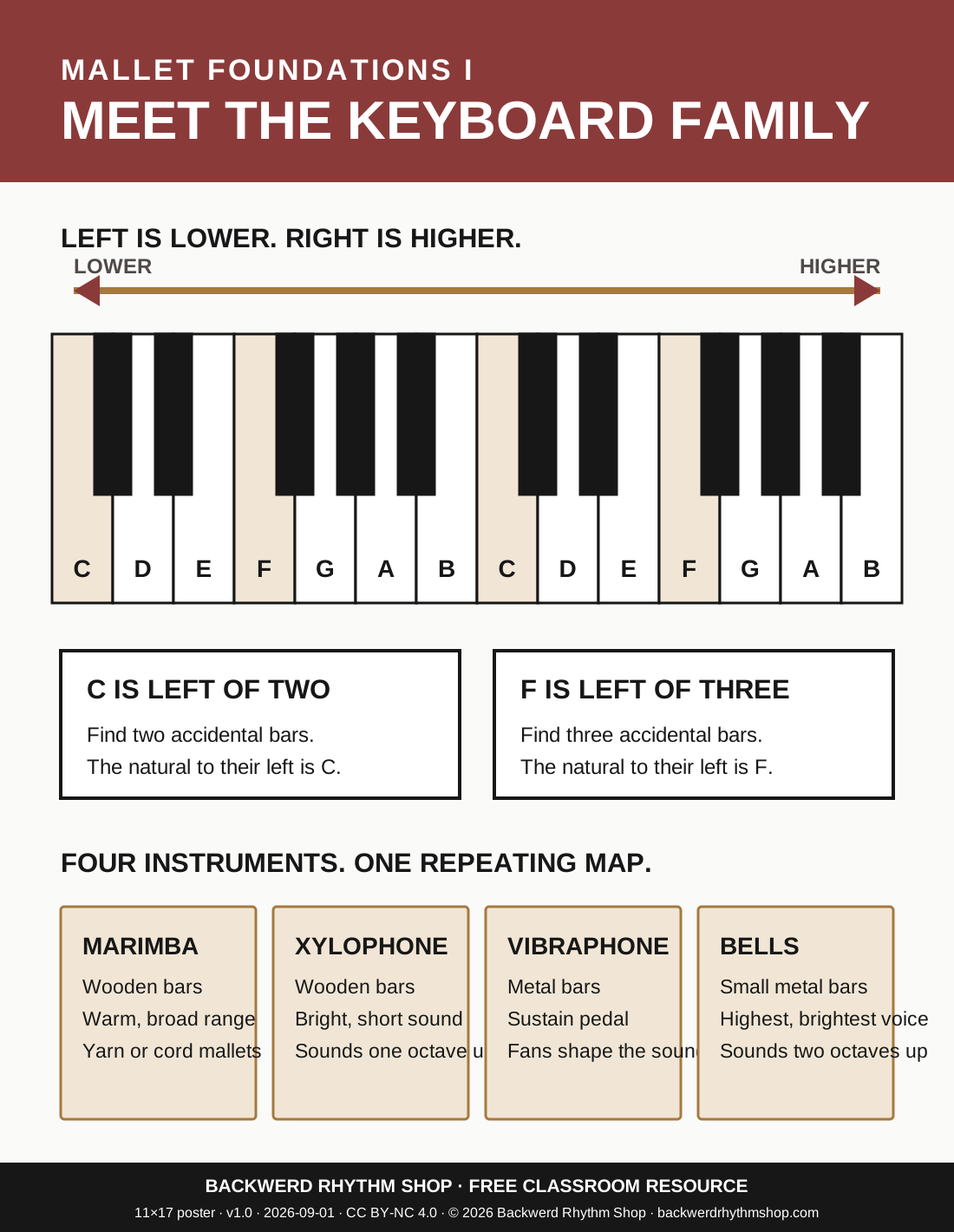
Students can repair one common keyboard-geography error by using high-low direction and the two-and-three accidental pattern to find C, F and a matching octave.
First teach — The full period, for a room meeting this topic for the first time.
Before the bell
Assumes students can already: Students have previously met the keyboard family and can identify at least one group of accidental bars. If they cannot separate naturals from accidentals, use the first-teach plan instead.
- The Meet the Keyboard Family poster
- Mallet Board or one keyboard instrument
- One worksheet per student
The period
-
3 minIndependent baseline probe
Three silent points
Without discussion, students point to a higher bar, any C and any F. Sort the room by the first incorrect move; that misconception determines the five-minute repair.
-
5 minTargeted instructional re-entry
Name the pattern before the note
Model only the broken rule: player-side direction, C left of two, or F left of three. Students echo the route in words before pointing again.
-
7 minIndependent evidence probe
New octave, same map
Use Mallet Board to move the prompts into a different octave. Mix C, F, higher, lower and matching-letter requests so recall of one location cannot masquerade as geography.
-
5 minImmediate evidence and next move
One route in writing
Students complete the direction and landmark items on the worksheet and explain one answer with the two-and-three pattern. Collect before returning to rehearsal.
How you will know
Evidence: The final direction-and-landmark responses with one written route.
What the current evidence supports
- Answers at least four of five mixed prompts correctly
- Explains either C or F with the correct accidental-group landmark
Why this measures the objective: Moving the prompts to a fresh octave shows whether the student owns the repeating map, and the written route exposes whether a correct point came from the landmark or from remembered position.
Boundary: Evidence collected in this period describes immediate performance under the stated conditions. It does not establish durable retention or broad mastery.
Check later
Delayed check: In a later rehearsal, move the prompts to a new octave before any review. The same-period comparison records immediate change only; record whether the repaired route is available later with reduced support.
Reaching everybody
If they are not there yet
- Keep one correct two-bar group and one correct three-bar group marked as anchors
- Let students say the route with a partner before recording it
If they are ready for a changed condition
- Ask for the same letter one octave higher and one octave lower
- Have students generate a landmark prompt for a classmate
Getting at the work
- Accept verbal, pointed or eye-gaze responses during the projected check
- Use the print keyboard map for students who cannot see the full instrument
If the room is not ready: If the second-octave prompts collapse, remove letter names and review only the repeating groups; return to C and F in the next rehearsal rather than compressing the first-teach sequence.
Standards note: No standards alignment is claimed for Mallet Foundations I until a code-level crosswalk has been verified.
What to look for
- The repaired answer stays correct when the octave changes
- Students use left and right from the player side